2026 Best SDIC Disinfectant Suppliers for Global Buyers
Choosing the right SDIC Disinfectant supplier requires more than comparing prices on a spreadsheet. Global buyers must examine product consistency, available chlorine, tablet dissolution, packaging quality, and technical support. A supplier may offer attractive terms, yet weak documentation can create serious delays.
Dr. Charles P. Gerba, a respected microbiologist and disinfection researcher, has stated, “Effective disinfection depends on concentration, contact time, and verification.” This principle remains practical for swimming pools, water treatment, sanitation services, and industrial facilities. Reliable suppliers should provide current certificates of analysis, safety data sheets, batch information, and clear handling guidance. They should also explain storage conditions, shelf life, and transport requirements.
Details matter.
A damaged carton, moisture exposure, or unclear labeling can reduce confidence before the product reaches its destination. Experienced suppliers usually maintain stable manufacturing processes, traceable raw materials, and inspection routines. They also understand that international buyers need responsive communication, consistent export packaging, and realistic delivery schedules. Certifications are useful, but they should be checked against the actual factory and product batch.
This guide reviews the 2026 Best SDIC Disinfectant Suppliers for Global Buyers through a practical purchasing lens. It considers manufacturing capability, quality controls, documentation, customization, logistics, and after-sales service. No supplier is perfect. That deserves honest attention. Some companies may excel in volume but lack flexibility. Others may provide strong technical support while serving fewer markets. The best choice depends on application, destination requirements, budget, and risk tolerance. Careful verification remains essential before signing a long-term supply agreement.
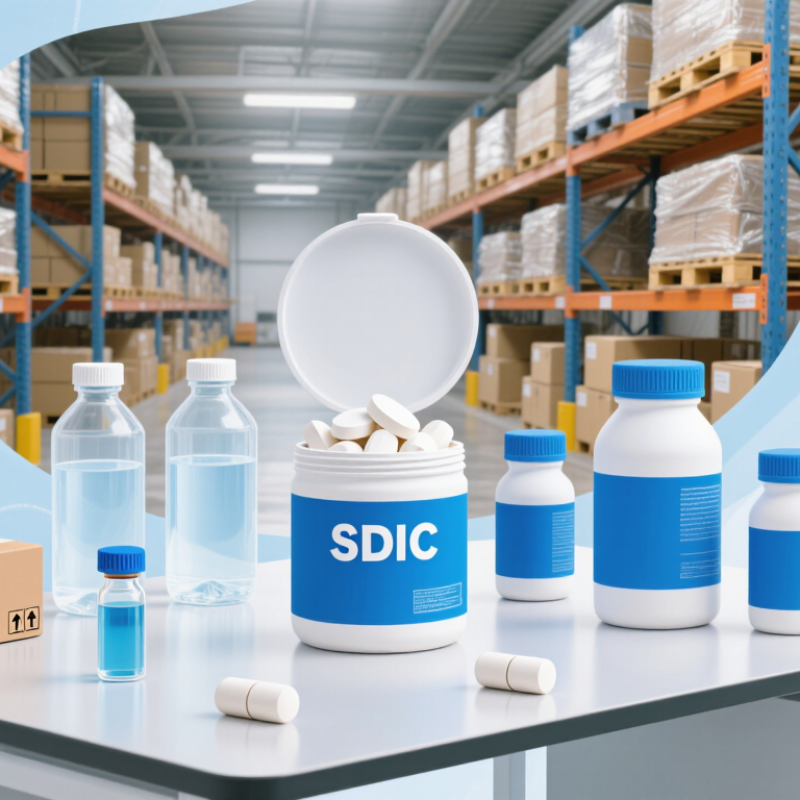
SDIC Fundamentals: 55–62% Available Chlorine by Product Grade
2026 Best SDIC Disinfectant Suppliers for Global Buyers
SDIC, or sodium dichloroisocyanurate, is commonly specified by available chlorine. Commercial grades usually range from 55% to 62%. Dihydrate products often provide about 55–57%, while anhydrous grades may reach 62–64%. The exact result depends on moisture, assay method, and storage conditions.
This difference matters during purchasing. A 55% tablet may require more material than a 62% granular product. Buyers should compare dosage on available chlorine, not product weight alone. The World Health Organization’s Guidelines for Drinking-water Quality, 2022, recommends maintaining at least 0.2 mg/L free chlorine at the delivery point under normal conditions. Product concentration must support that target after dilution, contact time, and water demand.
Ask suppliers for a recent certificate of analysis, production date, moisture data, and available-chlorine test method. AWWA B300-18 provides technical guidance for hypochlorite products used in water treatment. Packaging also deserves attention. Heat and humidity can reduce active chlorine before arrival. The label can mislead. In practice, a lower-assay grade with better stability may outperform a higher-assay grade stored poorly. One detail is often missed: tablet dissolution speed affects real dosing performance, especially in automatic feeders. Test a representative batch before signing a large contract.
Global Supplier Benchmark: Purity, Capacity, Certifications, and Lead Times
2026 Best SDIC Disinfectant Suppliers for Global Buyers
Global buyers should benchmark SDIC suppliers beyond quoted price. Purity affects dissolution, stability, odor, and application consistency. Request recent batch reports, specification sheets, and retained-sample procedures. Check available chlorine, moisture, pH, and insoluble matter against agreed specifications. A clean-looking certificate is not enough. Test results should match the actual production lot.
Capacity needs practical verification. Ask about monthly output, production lines, packaging formats, and peak-season allocation. A supplier may advertise large capacity but reserve little stock for export orders. Certifications also require careful review. Confirm the issuing body, certificate scope, expiry date, factory address, and covered product. Quality systems, safety documentation, and export records should support the claim. Documents can be incomplete.
Lead time often reveals operational maturity. Compare sample timing, order confirmation, production scheduling, inspection, and port delivery separately. A typical order may move quickly after approval, yet packaging changes can add days. Seasonal demand can create longer queues. Build a buffer. Do not trust one optimistic estimate. A written timeline with milestones is more useful than a broad promise. Buyers should also assess communication speed, complaint handling, and traceability during disruptions. The best benchmark is not flawless. It is transparent, repeatable, and supported by evidence.
2026 Best SDIC Disinfectant Suppliers for Global Buyers - Global Supplier Benchmark: Purity, Capacity, Certifications, and Lead Times
| Anonymous Supplier Profile | Typical SDIC Purity | Indicative Annual Capacity | Available Forms | Common Certifications | Typical Production Lead Time | Export Readiness | Buyer Verification Priority |
|---|---|---|---|---|---|---|---|
| Profile A — Large Integrated Producer | ≥ 60% available chlorine; commercial purity commonly 98–99% | 20,000–50,000 metric tonnes/year | Granules, tablets, powder | ISO 9001; product safety documentation; destination-market registrations where applicable | 15–30 days | High-volume container export; standard export packing | Batch consistency, dangerous-goods documents, production allocation |
| Profile B — Established Mid-Sized Manufacturer | ≥ 60% available chlorine; commercial purity commonly 98–99% | 8,000–20,000 metric tonnes/year | Granules, tablets, powder | ISO 9001; certificate of analysis; SDS; selected environmental systems | 20–40 days | Regular export shipments; private-label packing often available | Minimum order quantity, tablet hardness, packaging compliance |
| Profile C — Regional Contract Producer | ≥ 56–60% available chlorine; grade dependent | 3,000–10,000 metric tonnes/year | Granules, tablets | ISO 9001 or equivalent quality system; SDS; batch COA | 30–50 days | Export capable through freight partners | Subcontracting controls, traceability, storage conditions |
| Profile D — Tablet-Focused Specialist | Tablet formulation typically based on 56–60% available chlorine SDIC | 2,000–8,000 metric tonnes/year | Effervescent and non-effervescent tablets | ISO 9001; SDS; COA; label and packaging compliance support | 25–45 days | Suitable for retail, pool, and institutional packaging | Dissolution time, tablet weight tolerance, breakage rate |
| Profile E — Water-Treatment Grade Supplier | Typically 56–60% available chlorine | 5,000–15,000 metric tonnes/year | Granules, powder, slow-dissolving tablets | ISO 9001; SDS; COA; application-specific water-treatment documentation | 20–45 days | Bulk and drum shipments for municipal and industrial users | Applicable regulatory approval, impurity profile, dissolution performance |
| Profile F — Flexible Private-Label Supplier | Usually 56–60% available chlorine, depending on specification | 1,000–6,000 metric tonnes/year | Tablets, granules, sachets, retail packs | ISO 9001 or equivalent; SDS; COA; packaging and artwork support | 30–60 days | Best suited to smaller mixed-SKU export orders | MOQ, artwork approval, packaging shelf life, shipment consolidation |
Quality Verification: COA Testing for ≥55% Available Chlorine and Moisture
For global buyers, selecting SDIC disinfectant suppliers requires more than comparing price or packaging. The certificate of analysis, or COA, should verify available chlorine at 55% or higher. This figure confirms the product’s stated disinfecting strength. Ask for the batch number, production date, test date, and laboratory identity. Check the batch.
Moisture testing deserves equal attention. Excess moisture can affect storage stability, product flow, and the reliability of available chlorine results. Buyers should compare the reported moisture level with the agreed product specification, not with a vague industry claim. Suitable test methods may include controlled oven drying or Karl Fischer analysis, depending on the material grade and laboratory procedure. The method must be clearly recorded.
Request a signed COA for every shipment, not only for the first order. An independent laboratory report adds confidence, especially for large-volume purchases. Keep a retained sample and compare it with the COA when goods arrive. Look for clumping, damaged inner bags, unusual odor, or faded labeling. These details can reveal handling problems. A COA is evidence, not absolute truth. In practice, paperwork can be accurate while storage conditions fail. Suppliers should explain deviations openly and support retesting through a qualified laboratory. That response often shows more reliability than a perfect document.
Regulatory Screening: EPA, EU BPR, REACH, and UN 2465 Compliance
2026 Best SDIC Disinfectant Suppliers for Global Buyers
For global buyers, SDIC supplier screening should begin with regulatory evidence, not product claims. In the United States, confirm EPA registration for the intended disinfectant use. A manufacturing approval alone is insufficient. Check the registered formulation, approved pathogens, contact time, and label directions. These details must match the product sold and the claims used in marketing.
For European sales, review EU BPR requirements for both the active substance and the biocidal product. REACH registration, exposure information, and a compliant safety data sheet also need attention. Do not treat REACH compliance as automatic BPR authorization. They address different obligations. For international shipments, verify whether the material falls under UN 2465 and confirm its transport classification, packaging instructions, labels, and shipping documents. Documents should be current and traceable to the exact grade.
Tips: Ask for recent certificates, test reports, and batch records. Check issue dates and legal entities. Compare the SDS with the container label. A missing transport detail can delay a shipment. I have seen suppliers provide complete-looking files with mismatched product names. That mistake is easy to miss. Independent review remains valuable, especially when regulations or intended uses change.
Buyer Selection Matrix: Price, MOQ, Logistics, and 2026 Supply Reliability
For global SDIC buyers in 2026, price should be measured beyond the quoted cost per kilogram. Compare active chlorine content, packaging strength, testing fees, and payment terms. A cheaper offer may require costly relabeling or additional laboratory checks. Request a recent certificate of analysis, safety data sheet, batch number, and production date. Verify that documents match the actual shipment.
MOQ affects cash flow and inventory risk. A 500-kilogram trial order may suit seasonal demand, while a full-container MOQ can reduce unit cost but increase storage pressure. Ask whether mixed packaging, staggered delivery, or repeat-order pricing is available. Keep the comparison practical. Numbers can mislead.
Logistics need equal attention. Confirm port options, pallet dimensions, moisture protection, lead time, and dangerous-goods handling requirements. Suppliers should explain export documentation clearly and support destination-country compliance. For 2026 supply reliability, review capacity evidence, backup raw-material sources, quality-control records, and delivery performance from the previous year. One delayed batch can disrupt a distributor’s contracts. That risk is easy to underestimate. I have seen buyers focus heavily on price and overlook warehouse humidity, which later damaged packaging and slowed inspection. A stronger matrix scores cost, MOQ, logistics, documentation, and reliability separately, then tests each supplier against the same order scenario. Supplier claims still need independent verification.
2026 Best SDIC Disinfectant Suppliers for Global Buyers
Buyer Selection Matrix: Price, MOQ, Logistics, and 2026 Supply Reliability
Article Source:
Contact Us
We offer a just-in-time delivery solution supplying the highest quality materials to our customers. Get in touch today and learn how we can help your company.
Get in touch