What Is the Best Dry Type Transformer in China?
China’s dry type transformer market is expanding with data-center, railway, renewable-energy, and industrial projects. The opportunity is real. The choice is not simple.
Grand View Research estimates the global dry type transformer market reached approximately USD 5.6 billion in 2023. It also projects continued growth through 2030. MarketsandMarkets reports a lower market estimate, but identifies Asia-Pacific as the fastest-growing region. These differences matter. They reflect different definitions, product categories, and research methods.
For China, the best dry type transformer should match operating conditions, not merely a catalogue price. A 10 kV unit in a clean indoor substation faces different risks from a transformer installed near coastal salt spray. Winding insulation, temperature rise, partial-discharge performance, enclosure protection, noise, and after-sales testing all deserve attention. So does the manufacturer’s ability to provide factory test records and traceable materials.
Dr. S. V. Kulkarni, a recognized transformer engineering author, describes transformer design as “a compromise between cost, performance, and reliability.” That principle remains highly practical. Lower purchase prices can hide higher losses, difficult maintenance, or short service life. Sometimes, the cheapest option is not economical.
IEC 60076-11 provides an important reference for dry-type transformer design and testing. However, compliance alone does not prove that one Chinese supplier is the best. Site conditions, load patterns, fire requirements, and lifecycle costs must be compared carefully. This guide examines those details, while admitting one limitation: market reports cannot replace an independent technical inspection.
Dry Type Transformers: Definition, Structure, and Operating Principles
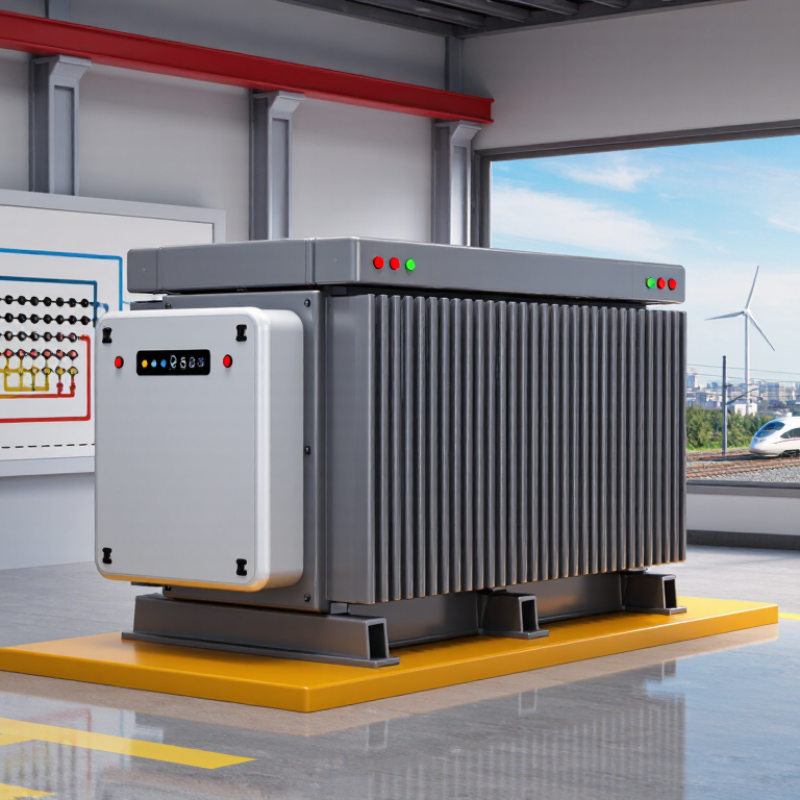
A dry type transformer transfers electrical energy without liquid insulation or oil. It uses air, solid insulation, or both to separate energized parts. This design reduces leakage concerns and simplifies indoor installation. It is common in factories, commercial buildings, hospitals, and renewable energy facilities.
Its main structure includes a laminated iron core, high-voltage windings, low-voltage windings, insulation, terminals, and a protective enclosure. Cast-resin windings resist moisture and dust more effectively. Vacuum-pressure-impregnated windings can offer reliable heat dissipation and practical maintenance. Cooling may rely on natural air circulation or forced fans. Sensors monitor winding temperature. Small details matter.
The operating principle follows electromagnetic induction. Alternating current creates magnetic flux in the core. This flux induces voltage in the secondary winding. The turns ratio controls voltage conversion, while core and winding losses produce heat. During selection in China, engineers should check load profile, altitude, humidity, ambient temperature, short-circuit strength, noise limits, and applicable standards. The best dry type transformer is not simply the largest or cheapest model. In field inspections, poor ventilation often causes avoidable temperature rises. An enclosure can also restrict airflow more than expected. Engineers should verify test records, insulation performance, partial discharge levels, temperature-rise results, and service access. The decision may still require revision after real operating data becomes available.
Key Types of Dry Type Transformers Manufactured in China
China manufactures several established dry type transformer designs for commercial, industrial, renewable energy, and infrastructure projects. Cast resin transformers use epoxy-encapsulated windings. They resist moisture, dust, and chemical exposure, making them suitable for humid substations and indoor plants. VPI transformers use vacuum pressure impregnation. Their windings remain more accessible for inspection and repair. Open-wound transformers are often lighter and more economical. However, they need cleaner, drier installation spaces. Amorphous-core designs can reduce no-load losses through improved core materials. That benefit matters when a transformer operates continuously, even under light load.
The best choice depends on the site, not only the purchase price. Engineers should check voltage ratio, frequency, insulation level, cooling method, enclosure rating, and available space. Noise matters. A hospital may require stricter acoustic control than a factory. In practical inspections, technicians also examine terminals, airflow paths, casting quality, and grounding connections. Factory testing should include winding resistance, turns ratio, insulation resistance, temperature rise, and partial discharge where applicable. Relevant Chinese and international requirements should be matched carefully. A certificate alone is not enough. Poor ventilation can shorten service life, even with a well-made unit. I have found that installation details are sometimes treated as secondary, and that assumption deserves review. A strong supplier should provide traceable test records, clear drawings, maintenance guidance, and responsive technical support.
Technical Standards and Performance Factors for Choosing the Best Model
What Is the Best Dry Type Transformer in China?
The best dry type transformer is not selected by price alone. Engineers should verify compliance with IEC 60076-11 and the applicable GB/T 1094.11 requirements. These standards define insulation, temperature rise, dielectric strength, and testing methods. A reliable model should show measured no-load and load losses, not vague efficiency claims.
The IEA Electricity 2024 report projects global electricity demand to grow by about 3.4% annually from 2024 to 2026. This trend makes thermal performance increasingly important. Check the transformer’s rated capacity, overload capability, cooling method, and temperature-rise limit. For factories, hospitals, and data rooms, partial discharge testing matters. Low noise and suitable IP protection also deserve attention.
The U.S. Department of Energy’s 2024 distribution transformer analysis estimates major lifetime energy savings from stronger efficiency requirements. The figure reaches about 3.6 quadrillion British thermal units over thirty years. Yet imported figures cannot replace site measurements. Altitude, humidity, dust, harmonics, and daily load patterns can change actual performance. A low purchase price may look clever. It may not remain economical after years of losses. Engineers should compare total ownership cost, test certificates, service access, and warranty terms. Datasheets are useful, but they are not the whole truth.
Leading Applications of China-Made Dry Type Transformers
China-made dry type transformers serve demanding electrical systems in many sectors. Their leading applications include commercial buildings, hospitals, factories, rail stations, data centers, and renewable energy facilities. In apartment towers, they reduce fire risk because they use no liquid insulation. Hospitals value their clean operation and stable voltage supply. Data centers need dependable performance under continuous loads. A short outage can be costly.
Industrial plants use these transformers near motors, welding equipment, and automated production lines. Solar farms and wind projects often install them between inverters and medium-voltage networks. Cast-resin designs handle dust and moisture better than many conventional options. However, harsh coastal air still requires careful enclosure and ventilation planning. No model is best everywhere.
Field selection should consider load profile, altitude, ambient temperature, harmonics, noise limits, and available space. Engineers should verify insulation levels and cooling methods before ordering. They should also review routine test reports, temperature-rise data, and partial-discharge results for cast-resin units. Compliance with applicable GB or IEC requirements improves reliability, but paperwork alone cannot replace inspection. A lower quotation may look attractive, yet weaker accessories or limited after-sales support can create trouble later. I would leave room for doubt here: even a well-tested transformer may underperform when installation airflow is poor. Proper cable sizing, grounding, torque checks, and thermal scanning remain essential after commissioning.
How to Evaluate Quality, Safety, Cost, and Supplier Reliability
What Is the Best Dry Type Transformer in China?
How to Evaluate Quality, Safety, Cost, and Supplier Reliability
The best dry type transformer is not always the cheapest unit. It should match the site load, voltage, altitude, cooling method, and fire-safety requirements. IEC 60076-11 provides the main international framework for dry type transformer design and testing. Ask for routine test records, temperature-rise data, insulation levels, and partial-discharge results. A reliable factory should explain each value clearly.
Safety needs practical verification. Check the insulation class, enclosure rating, winding temperature sensors, and protection against dust and moisture. For hospitals, buildings, and factories, fire behavior matters greatly. The U.S. Department of Energy’s 2024 transformer efficiency rule estimates 3.6 quadrillion British thermal units of energy savings over 30 years. This shows why no-load and load losses deserve serious attention. Yet efficiency alone is not enough. Poor ventilation can shorten service life.
Tips: Compare total ownership cost, not only the purchase price. Request a factory acceptance test, material traceability, calibration certificates, and clear warranty terms. Confirm production capacity through recent delivery records, not promises. ISO 9001 certification helps, but it does not replace technical audits. I would also inspect sample coils, core joints, and busbar workmanship when possible. A low quote may hide weaker insulation or longer downtime. No scorecard is perfect. Use measured evidence, and keep room for engineering judgment.
What Is the Best Dry Type Transformer in China? — How to Evaluate Quality, Safety, Cost, and Supplier Reliability
| Evaluation Area | Key Dimension | Suggested Weight | ||
|---|---|---|---|---|
| Quality | Applicable design standard | Compliance with IEC 60076-11 for dry-type transformers, or the applicable national standard specified in the purchase contract. | Review the type-test report, routine-test report, nameplate, technical data sheet, and certificate of conformity. Confirm that the rated voltage, power, frequency, insulation level, and cooling method match the offered unit. | 8% |
| Quality | Rated capacity and voltage accuracy | The transformer should meet the specified kVA/MVA rating, primary and secondary voltage, frequency, vector group, impedance, and tap range without unexplained deviations. | Compare the approved drawing, nameplate, factory test report, and purchase specification. Check voltage ratio and phase displacement during routine testing. | 8% |
| Quality | Temperature rise and insulation system | Temperature-rise class and insulation system should be selected for the site duty. Common dry-type designs use insulation systems rated for 155°C or 180°C, but the specified temperature rise must remain within the project limit. | Verify the insulation thermal class, temperature-rise test, winding-resistance test, and thermal performance data. Confirm that ambient temperature and altitude corrections have been applied. | 9% |
| Quality | Losses and efficiency | No-load and load losses should be clearly guaranteed at the contractual reference temperature. Lower losses reduce lifetime operating cost; comparison is valid only when capacity, impedance, voltage, and test conditions are identical. | Request certified no-load loss, load loss, total loss, and efficiency calculations. Check the test temperature, measurement tolerance, and applicable test method. | 10% |
| Safety | Insulation and dielectric strength | The unit should pass power-frequency withstand, induced-voltage, and partial-discharge tests where specified. Partial discharge should be controlled to the project or standard acceptance limit. | Review routine and type-test records, including dielectric withstand and partial-discharge results. Confirm test voltage, duration, acceptance criteria, and calibration status of instruments. | 12% |
| Safety | Fire, smoke, and environmental performance | For buildings and public facilities, select a resin system and enclosure arrangement suitable for the required fire and smoke classification. Do not assume that every dry-type transformer is automatically low-smoke or fire-resistant. | Request the relevant fire-performance test report and material data. Confirm that the tested construction, resin system, enclosure, and accessories are the same as the supplied configuration. | 10% |
| Safety | Enclosure protection and cooling | Select the required IP rating according to the installation environment. Typical indoor enclosures may use IP20 or higher, while dusty or outdoor locations may require a higher rating and additional corrosion protection. | Verify the enclosure IP test report, ventilation design, fan control logic, temperature sensors, alarm contacts, and derating requirements. Check that airflow is not obstructed by the installation layout. | 8% |
| Safety | Noise and vibration | The guaranteed sound-pressure or sound-power level should satisfy the project limit at the stated load and measurement distance. Lower noise is especially important in hospitals, offices, residences, and data centers. | Request a factory noise test or guaranteed noise declaration. Confirm the measurement standard, load condition, room arrangement, and whether cooling fans are operating. | 5% |
| Cost | Total cost of ownership | Evaluate purchase price together with no-load losses, load losses, maintenance, cooling-fan replacement, testing, transport, installation, and disposal. A lower initial price is not necessarily the lowest lifetime cost. | Use the same operating profile for every quotation. Calculate annual energy cost from guaranteed losses, operating hours, load factor, and the local electricity tariff. | 10% |
| Cost | Quotation transparency and commercial scope | The quotation should separately identify transformer, enclosure, fans, temperature controller, protection devices, accessories, testing, packaging, freight, insurance, installation support, and taxes. | Issue a structured request for quotation and compare deviations line by line. Reject quotations that omit loss guarantees, delivery terms, warranty scope, or required accessories. | 6% |
| Supplier Reliability | Quality-management system and traceability | The supplier should maintain documented design control, incoming-material inspection, process inspection, final testing, calibration control, and serial-number traceability. | Request a valid quality-management certificate, production-flow description, sample inspection records, calibration certificates, and a traceability example for windings, cores, resin, and accessories. | 7% |
| Supplier Reliability | Factory testing and inspection access | A reliable supplier should accept routine testing for every unit and clearly define optional type tests, witness tests, hold points, and nonconformance handling. | Agree on an inspection and test plan before production. Confirm test-equipment capability, test procedures, reporting format, corrective-action process, and the purchaser’s right to witness testing. | 7% |
| Supplier Reliability | Delivery and production capacity | The supplier should provide a realistic manufacturing schedule with design approval, material procurement, winding, casting or impregnation, assembly, testing, packing, and shipment milestones. | Request a project schedule, capacity statement, production-slot confirmation, and evidence of material lead-time control. Include delay notification and recovery requirements in the contract. | 5% |
| Supplier Reliability | Warranty, service, and spare parts | The contract should define warranty duration, exclusions, response time, troubleshooting support, replacement-part availability, and responsibilities for commissioning and defects. | Review the warranty document and service organization. Confirm availability of temperature controllers, fans, sensors, terminals, gaskets, and other replaceable components for the expected service life. | 5% |
Scoring guidance: Score each dimension from 0 to 5, multiply by the suggested weight, and require a separate pass on all critical safety items. Final selection should be based on the approved project specification, applicable local regulations, IEC 60076-11 requirements, certified test results, and total cost of ownership rather than purchase price alone.
Article Source:
Contact Us
We offer a just-in-time delivery solution supplying the highest quality materials to our customers. Get in touch today and learn how we can help your company.
Get in touch