How to Source Chemicals Efficiently for the Chemical Industry?

The chemical industry plays a crucial role in global markets, accounting for approximately 5% of global GDP. Efficient sourcing of chemicals is essential for maintaining profitability and competitiveness. Recent studies show that supply chain disruptions can lead to up to a 20% increase in production costs. Companies need to adopt strategic sourcing methods to mitigate such risks.

A robust sourcing strategy considers various factors. It includes assessing supplier reliability, material quality, and compliance with industry standards. Reports by the American Chemical Society indicate that nearly 70% of chemical manufacturers face challenges in securing reliable suppliers. This inefficiency can hinder innovation and growth within the sector. Despite advances in technology, many firms still rely on traditional methods.

Evaluating potential suppliers is often overlooked. Aligning values such as sustainability and environmental impact can lead to better long-term partnerships. The focus should not only be on cost savings but also on building resilient supply chains. Reflection on current practices may reveal opportunities for improvement in sourcing chemicals. By embracing a proactive approach, companies can navigate this complex landscape more efficiently.

How to Source Chemicals Efficiently for the Chemical Industry?

Identifying Reliable Suppliers in the Chemical Industry
How to Source Chemicals Efficiently for the Chemical Industry?

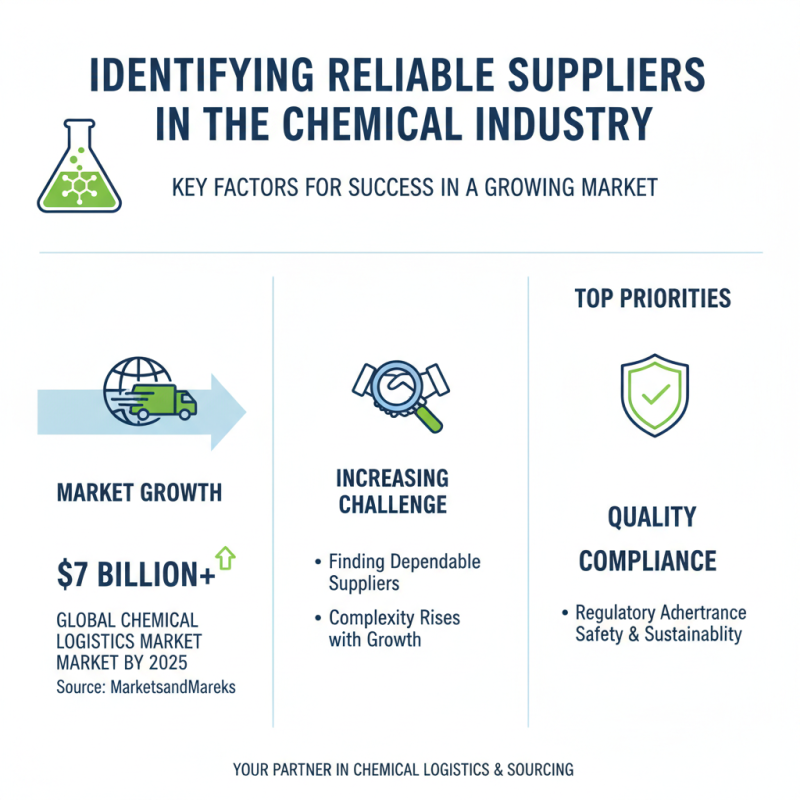
Identifying reliable suppliers in the chemical industry is crucial. A report by MarketsandMarkets projects that the global chemical logistics market will reach over $7 billion by 2025. With this growth, finding dependable suppliers will become more challenging. Quality and compliance should be your top priorities.

When evaluating suppliers, consider their certifications and reputation. Check if they comply with industry standards like ISO 9001. A survey revealed that 70% of companies prioritize supplier certification as a key selection criterion. This focus on quality helps ensure the safety and efficacy of chemical products.

Tip: Attend industry conferences and networking events. They provide opportunities to meet potential suppliers face-to-face. Building rapport can often reveal invaluable insights about their reliability.

An effective approach is to ask for references from existing clients. A supplier's track record often speaks louder than marketing claims. A noteworthy finding is that 60% of senior managers rely on peer recommendations when selecting suppliers.

Tip: Conduct regular audits of your suppliers. Regular assessments help maintain compliance and quality standards. They can also uncover areas for improvement, ensuring continued partnership efficiency.

Evaluating Chemical Quality and Compliance Standards

Evaluating chemical quality and compliance standards is a crucial step in sourcing chemicals for the industry. The quality of raw materials directly impacts product safety and efficacy. Adhering to strict standards ensures that the chemicals used meet regulatory requirements. This includes checking for certifications, purity levels, and testing methods. A comprehensive assessment of suppliers is essential.

Many companies face challenges in verifying quality. Relying solely on certificates can be misleading. It is vital to conduct independent testing when possible. Collaborating with trusted laboratories can provide a reliable assessment of chemical properties. Regular audits of suppliers help ensure ongoing compliance and quality assurance.

Experience shows that transparent communication with suppliers is vital for maintaining standards. Discussing quality control processes openly can uncover potential issues early. Companies should remain adaptable and review their sourcing strategies regularly. QA/QC methods should evolve as new regulations emerge. This constant evaluation aids in maintaining a high standard of safety and compliance.

Leveraging Technology for Efficient Sourcing Processes

In today's chemical industry, the efficiency of sourcing chemicals is crucial. Leveraging technology can streamline this process significantly. Digital platforms enable real-time tracking of chemical availability. According to a report from the International Chemical and Oil Data Organization, companies using digital tools improved sourcing speed by 35%. Accurate data leads to better decision-making.

However, technology adoption is not without challenges. Many companies struggle with integrating new systems. A survey found that 40% of firms reported difficulties in data standardization. This inconsistency can lead to delayed shipments and increased costs. In a rapidly changing market, even small inefficiencies can have large impacts.

Yet, embracing technology can enhance buyer-supplier collaboration. Platforms that enable transparent communication can reduce misunderstandings. This transparency fosters trust and reliability. A study indicated that firms with high supplier engagement saw a 20% reduction in procurement costs. Companies must focus on overcoming integration issues to fully realize these benefits. Embracing gradual change may serve them better than seeking immediate perfection.

Building Strong Supplier Relationships for Long-Term Success

Building strong supplier relationships in the chemical industry is essential for long-term success. According to a report by the European Chemical Industry Council, effective collaboration can reduce sourcing costs by 10-15%. Suppliers are not just vendors; they are partners. Investing time in building trust can lead to better quality products and timely deliveries.

Maintaining open communication is crucial. Regular check-ins can uncover potential issues before they escalate. It's important to share feedback, both positive and negative. Doing so fosters an atmosphere of continuous improvement. A joint effort can lead to innovative solutions. This is vital in a rapidly evolving market.

Tips: Engage suppliers in early-stage discussions regarding product specifications. Create transparency around your expectations. Consider sharing market insights with them. This can strengthen your relationship.

Building strong relationships takes effort. Supplier reliability can fluctuate. Regular assessments are necessary. Keep track of performance metrics. By doing so, you can identify areas for improvement. Relying on suppliers too heavily can be risky, so diversify your supply base.

Implementing Sustainable Sourcing Practices in Chemical Procurement

Sustainable sourcing practices in chemical procurement are crucial for industry advancement. They help reduce environmental impact while maintaining product quality. One approach involves selecting suppliers that prioritize eco-friendly methods. This commitment can drive the adoption of greener technologies in chemical production.

Engaging in long-term partnerships with these suppliers can also enhance supply chain reliability. Regular assessments of supplier practices can ensure adherence to sustainability goals. There are challenges here, like fluctuating costs and limited availability of sustainable materials. However, proactive planning can mitigate these issues.

Training teams on sustainability can foster a culture of responsibility. This education empowers employees to make informed decisions about sourcing. Collaboration with industry groups can also provide valuable insights. Ultimately, integrating sustainable practices requires continuous reflection and adaptation in procurement strategies.

Contact Us

We offer a just-in-time delivery solution supplying the highest quality materials to our customers. Get in touch today and learn how we can help your company.

Get in touch