10 Essential Tips for Effective Chemical Sourcing Strategies?

In today’s competitive market, effective chemical sourcing plays a crucial role in business success. Companies rely on quality chemicals to maintain production efficiency and ensure product safety. Developing a strong chemical sourcing strategy is not just about finding suppliers. It involves understanding market dynamics and fostering relationships.

Navigating the complexities of chemical sourcing requires experience and industry knowledge. It’s important to prioritize quality over cost. Sometimes, lower prices mean compromised standards. Diversifying suppliers can reduce risks, but it has its challenges. Companies may struggle to assess new suppliers effectively.

Companies must be proactive in addressing their sourcing needs. Transparent communication with suppliers fosters trust and reliability. However, businesses often overlook the importance of ethical sourcing. Reflecting on sourcing practices can reveal potential improvements. Emphasizing sustainability can enhance a brand's reputation and ensure future viability in chemical sourcing.

10 Essential Tips for Effective Chemical Sourcing Strategies?

Identifying Your Chemical Sourcing Needs and Requirements

Identifying your chemical sourcing needs starts with a clear understanding of your goals. Are you looking for quality, cost-effectiveness, or specific safety standards? Clarifying these priorities can guide your sourcing approach. Achieving the right price is crucial, but so is ensuring the chemicals meet required regulations. This balance can be challenging and requires diligent research.

Next, assess the quantities required. Are you sourcing in bulk or smaller amounts? This decision affects supplier choices and costs. A clear forecasting strategy can help prevent overstocking or shortages. Identify potential suppliers who can meet these demands and evaluate their reliability. Communication is essential here; ask questions and request documentation. A knowledgeable supplier is invaluable for navigating complex regulations and ensuring you meet safety standards.

Establishing a checklist of your specific requirements can lead to more informed decisions. This could include factors like delivery times, storage conditions, and ongoing support. Be cautious in assuming that all suppliers will meet your standards without verification. Some might overpromise but underdeliver. Reflect on past experiences, and understand what didn't work. These lessons are key to improving your future sourcing strategies.
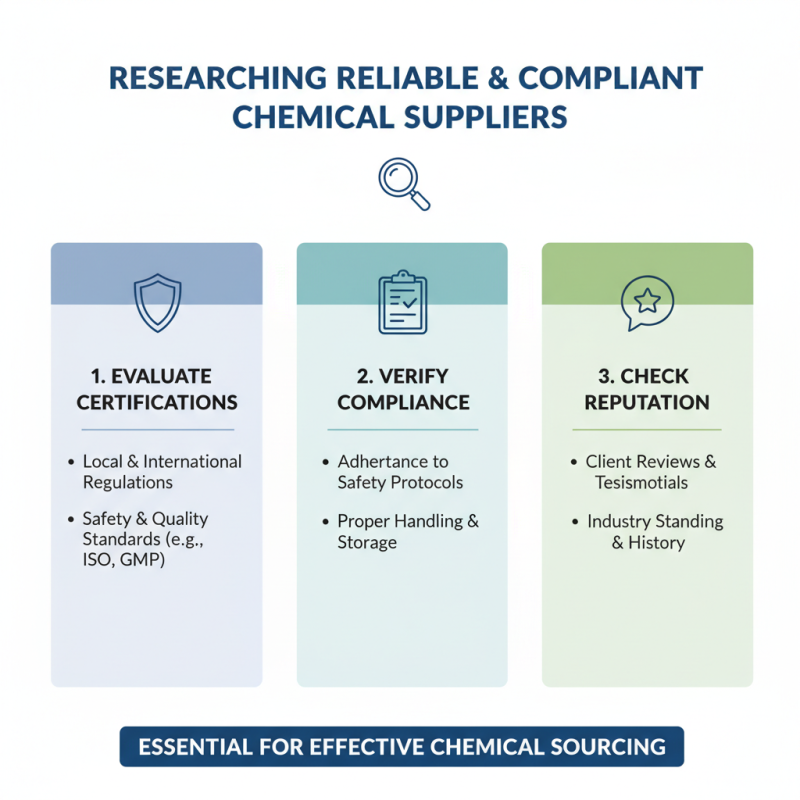
Researching Reliable and Compliant Chemical Suppliers

10 Essential Tips for Effective Chemical Sourcing Strategies?

Researching reliable and compliant chemical suppliers is crucial for effective chemical sourcing. Start by evaluating suppliers' certifications. Look for compliance with local and international regulations. This ensures adherence to safety standards and quality control measures. A supplier’s reputation matters. Check reviews and testimonials to gauge their reliability.

Engage with potential suppliers directly. Ask about their sourcing processes and quality assurance methods. This can uncover insights into their operations. Additionally, request samples to test their materials. Reliable suppliers will provide these without hesitation. Face-to-face meetings can strengthen relationships. Virtual meetings are a good alternative if travel is not feasible.

Always consider the environmental impact. Suppliers should demonstrate sustainability in their sourcing practices. It's also essential to conduct audits periodically. Regular assessments can reveal discrepancies in compliance. These steps help create a more robust supply chain. Rely on data and feedback to refine your sourcing strategy over time.

Evaluating Supplier Credentials and Quality Assurance Practices

Evaluating supplier credentials is a crucial step in chemical sourcing. It involves understanding their background, expertise, and reliability. Look for suppliers with proven experience in the industry. Their track record can indicate their capability to meet your needs.

Quality assurance practices are equally important. Check if suppliers have certifications that reflect adherence to industry standards. Quality audits can reveal how they manage their processes. Even if a supplier seems reliable, it is essential to delve into their quality control measures. You might discover areas that need improvement.

When assessing suppliers, communication plays a key role. Clear dialogue can uncover potential issues. Encourage suppliers to address any weaknesses. This creates a collaborative environment. Share your expectations clearly. This can align your goals with their capabilities. With thoughtful evaluation, you can build a stronger supply chain.

Negotiating Terms and Pricing for Chemical Sourcing Agreements

Negotiating terms and pricing in chemical sourcing is critical for businesses seeking cost-effective solutions. Industry research indicates that effective negotiation can reduce costs by up to 10-20%. Understanding market trends helps buyers leverage their negotiating power. Knowledge of suppliers’ production capacities is essential. This knowledge allows companies to request pricing based on their specific needs.

Transparency in communication fosters trust. Often, companies rely on historical pricing data and market conditions to guide their discussions. Buyers should prepare different scenarios and outcomes. For example, strategies could include lower pricing in exchange for higher volume orders. A recent survey found that companies that engage in value-based negotiation achieve more favorable terms.

Understanding the cost structure of suppliers enhances negotiation. Factors can include raw material costs, labor expenses, and logistical considerations. Identifying these elements helps buyers frame their proposals effectively. Regularly revisiting contracts ensures that terms remain competitive. However, companies sometimes overlook the importance of long-term relationships. Investing in these relationships can lead to better pricing and terms over time.

Establishing Strong Communication and Relationship Management with Suppliers

Establishing strong communication with suppliers is vital for successful chemical sourcing. Building relationships takes time and effort. Transparency and regular updates help foster trust. Suppliers appreciate when they are kept in the loop about project timelines and expectations.

One crucial tip is to ask open-ended questions. This encourages suppliers to share insights. Understanding their capabilities can lead to better sourcing decisions. Be attentive to their feedback. It can reveal potential issues before they arise.

Another aspect to consider is the importance of cultural awareness. Different suppliers may have varying communication styles. Adjusting your approach can bridge gaps. Small efforts, like personalizing emails, go a long way. Reflecting on your communication style can improve interactions, making them more effective.

Contact Us

We offer a just-in-time delivery solution supplying the highest quality materials to our customers. Get in touch today and learn how we can help your company.

Get in touch