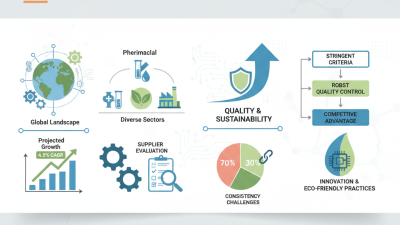
Why Is Industrial Chemistry Important for Global Buyers?

Industrial chemistry is a practical foundation for global manufacturing, not merely a laboratory discipline. It shapes the purity, performance, safety, and consistency of materials used in coatings, plastics, electronics, agriculture, construction, and healthcare. For international buyers, these details directly affect production costs and customer trust.

The International Energy Agency identifies chemicals as the largest industrial energy consumer worldwide (IEA, Chemicals, 2023). This finding matters. Energy use influences product pricing, carbon exposure, and supply stability. The IEA also expects chemical production to keep expanding as demand grows across emerging markets. Buyers therefore need more than a competitive quotation. They need verified specifications, stable batch quality, transparent origin data, and realistic delivery capabilities.

UNIDO’s International Yearbook of Industrial Statistics shows manufacturing remains central to global economic development, although industrial performance differs sharply between regions (UNIDO, 2024). That difference can create hidden risks. A supplier may offer excellent samples but struggle with scale-up, documentation, or consistent process control. The sample is not the supply chain.

Experienced procurement teams often review certificates of analysis, safety data sheets, audit records, packaging conditions, and change-control procedures. They also examine regulatory expectations in the destination market. ISO 9001 and ISO 14001 certifications can provide useful evidence, but they should not replace direct supplier verification. This is where industrial chemistry becomes commercially important: it connects technical performance with responsible sourcing, resilience, and measurable quality. No single report captures every operational risk. Buyers must still ask difficult questions, test assumptions, and verify claims before signing long-term agreements.

Why Is Industrial Chemistry Important for Global Buyers?

Definition and Scope of Industrial Chemistry

Industrial chemistry is the applied science of converting raw materials into useful chemicals and materials at commercial scale.

Its scope includes reaction design, catalysis, separation, formulation, process control, testing, packaging, and waste reduction. It covers polymers, coatings, fertilizers, solvents, electronic materials, pharmaceuticals, and water-treatment chemicals. The field connects laboratory chemistry with factory realities, such as heat transfer, purity limits, equipment corrosion, and batch consistency.

Its commercial scale is substantial. The United Nations Environment Programme estimated the global chemical industry’s value at US$5.7 trillion in 2017, with potential to nearly double by 2030. The report also linked chemical production to millions of jobs and many downstream sectors. According to the International Energy Agency’s Future of Petrochemicals report, chemicals consume about 14% of global oil and 8% of global gas as feedstock. These figures matter to global buyers because energy prices, carbon exposure, and raw-material availability can change delivered costs quickly.

A practical definition must include the full product life cycle. A buyer should examine technical specifications, impurity profiles, production capacity, certificates, transport conditions, and change-control procedures. A material may pass laboratory testing yet fail during large-scale processing. That gap is common. Industrial chemistry is not only about molecular structure; it is also about repeatability, process safety, regulatory documentation, and responsible sourcing. UNEP’s Global Chemicals Outlook II also warns that chemical growth can increase environmental and health pressures when controls remain weak. One detail is often missed: the cheapest quotation may hide higher energy use, unstable quality, or difficult end-of-life treatment.

Key Industrial Chemistry Processes and Materials

Industrial chemistry matters because buyers purchase performance, not merely chemical names.

Key processes include catalysis, polymerization, electrolysis, crystallization, and membrane separation. Each process controls purity, reaction speed, energy use, and waste generation. A catalyst can reduce reaction temperatures, while precise polymerization can produce coatings that resist heat, moisture, or abrasion.

Material selection also affects supply security.

The International Energy Agency reported in its Global Critical Minerals Outlook 2024 that lithium demand rose by about 30% in 2023, while demand for nickel, cobalt, and graphite increased by roughly 8–10%.

These figures show why global buyers should examine feedstock availability, refining capacity, and recycling options. A material may meet today’s specification but become difficult to source tomorrow. That risk is often underestimated.

Environmental data adds another layer. The OECD Global Plastics Outlook reported approximately 460 million tonnes of plastics production in 2019, with only 9% recycled. Buyers should therefore request lifecycle data, recycled content verification, and controlled impurity limits.

In plant audits, a cheaper input can create higher filtration costs, unstable batches, or expensive equipment cleaning.

Not always cheaper.

Reliable purchasing requires more than a certificate. Independent testing, batch traceability, safety documentation, and pilot-scale trials help verify supplier claims. However, even strong laboratory results cannot predict every production condition.

Humidity, storage time, mixing order, and operator experience may change the final result. Good industrial chemistry decisions remain technical, practical, and open to revision.

How Industrial Chemistry Supports Global Supply Chains

Industrial chemistry quietly holds global supply chains together. It turns raw minerals, gases, oils, and biomass into controlled materials for manufacturing. For global buyers, consistency often matters more than a low quotation. A small change in moisture, particle size, or purity can stop a production line. Experienced procurement teams review technical data before discussing price. They compare specifications, batch records, test methods, and storage conditions. This practical step reduces surprises at the receiving dock.

Chemists and quality engineers also help buyers manage international movement. They assess stability during heat, humidity, vibration, and long transit times. A material may leave a factory within specification but arrive degraded. Packaging, sealed liners, labeling, and sampling plans become part of supply planning. Reliable suppliers provide certificates of analysis, traceable batch numbers, and clear handling guidance. Documentation supports customs reviews and helps facilities use consistent acceptance criteria. It is not glamorous work. It prevents expensive confusion.

Industrial chemistry also supports continuity when markets change. Technical teams can qualify alternative feedstocks, adjust formulations, or identify compatible materials without weakening performance. Buyers should ask how changes are validated, rather than simply accepting a replacement. No forecast is perfect. A spreadsheet may miss a port delay, failed test, or packaging shortage. Supplier audits, independent testing, and realistic safety stock provide useful protection. Still, every control has limits, so buyers must keep challenging their assumptions.

Benefits for International Buyers and Manufacturers

Why Is Industrial Chemistry Important for Global Buyers?

Benefits for International Buyers and Manufacturers

Industrial chemistry gives international buyers more than a product specification. It provides measurable control over purity, performance, safety, and supply continuity. The UN Environment Programme’s Global Chemicals Outlook II projects chemical production capacity could triple by 2050 from 2017 levels. Buyers therefore need suppliers prepared for larger demand and stricter environmental expectations.

Manufacturers benefit from stable international purchasing because predictable orders support better equipment use, workforce planning, and quality control. A buyer who shares accurate forecasts can reduce emergency production and costly transport changes. Technical documents also matter. Batch records, safety data sheets, test results, and traceability details help purchasing teams compare suppliers fairly across borders. Details decide.

The International Energy Agency identifies chemicals as one of the largest industrial energy-consuming sectors. This makes energy efficiency important for both manufacturers and buyers. Lower process energy can improve production costs and reduce emissions linked to purchased materials. However, sustainability claims are not always complete. Some reports measure factory emissions, while others exclude raw-material production or transport. Buyers should ask for the boundary, method, and reporting year.

Practical audits still reveal uncomfortable gaps. A supplier may offer excellent laboratory results but weak packaging controls. Another may provide competitive pricing but inconsistent delivery records. These weaknesses do not automatically reject a supplier. They require corrective actions, realistic contracts, and repeated verification. International buyers gain reliability when chemistry, documentation, and operational evidence are evaluated together.

Why Is Industrial Chemistry Important for Global Buyers? — Benefits for International Buyers and Manufacturers

Key industrial-chemistry data points that influence product safety, regulatory access, supply reliability, cost control, and sustainability in international trade.

Data Dimension Verified Data Point Importance for International Buyers Value for Manufacturers Reference Basis
Product Classification GHS framework
Hazard classification, labels, and safety data are organized under the United Nations Globally Harmonized System of Classification and Labelling of Chemicals.
Enables buyers to compare hazards, storage requirements, transport restrictions, and personal-protection needs across international suppliers. Creates a common communication structure for exporting chemical products to markets with different national implementation rules. United Nations GHS, “Purple Book”
Regulatory Registration ≥1 metric tonne/year
Under the European Union REACH framework, substances manufactured or imported at or above this annual quantity generally require registration, subject to applicable exemptions.
Helps buyers verify whether a substance can legally enter the relevant market and whether the supplier has appropriate compliance documentation. Supports market access planning, substance data management, and continuity of sales in regulated regions. European Union REACH Regulation, Regulation (EC) No 1907/2006
Safety Documentation 16 sections
Safety Data Sheets commonly follow the standardized 16-section structure defined in the UN GHS framework and implemented by national regulations.
Provides consistent information on handling, first aid, firefighting, accidental release, exposure controls, disposal, and transport. Improves technical communication with distributors, logistics providers, downstream users, and workplace safety teams. United Nations GHS, Annex 4: Safety Data Sheets
Quality Management ISO 9001
An international quality-management standard based on documented processes, risk-based thinking, performance evaluation, and continual improvement.
Reduces uncertainty in batch consistency, specifications, change control, complaint handling, and supplier qualification. Strengthens process control and provides an internationally recognized structure for demonstrating reliable manufacturing practices. International Organization for Standardization, ISO 9001
Environmental Performance ISO 14001
An environmental-management standard covering environmental aspects, legal obligations, objectives, monitoring, and continual improvement.
Supports responsible sourcing reviews and helps buyers assess environmental-management maturity without relying only on marketing claims. Encourages systematic control of emissions, waste, resource use, and environmental risks throughout production. International Organization for Standardization, ISO 14001
Transport and Logistics UN Model Regulations
Dangerous goods are assigned transport classifications, identification numbers, packaging requirements, and labeling provisions according to their hazards.
Improves freight planning, reduces customs and handling delays, and clarifies packaging and documentation requirements. Helps manufacturers prepare compliant shipments and select suitable packaging, routes, and logistics partners. United Nations Recommendations on the Transport of Dangerous Goods
Supply Continuity Critical control points
Industrial chemistry uses specifications, sampling plans, analytical testing, batch records, and change-control procedures to manage product variation.
Improves confidence that repeat orders will meet the same purity, concentration, physical-property, and performance requirements. Enables earlier detection of raw-material, process, and packaging issues while supporting more predictable production planning. Common chemical quality-control and process-management practices
Cost and Resource Efficiency Process optimization
Yield improvement, solvent recovery, energy management, waste minimization, and material substitution are established industrial-chemistry approaches.
Can lower the total landed cost by reducing material loss, waste-treatment needs, energy exposure, and avoidable logistics volume. Improves production efficiency and supports more competitive pricing while reducing operational and environmental risks. Industrial process engineering and resource-efficiency principles
Product Development Performance-based design
Formulation and materials chemistry can be used to adjust properties such as stability, viscosity, solubility, corrosion resistance, purity, and shelf life.
Allows buyers to specify measurable technical requirements rather than selecting products only by generic product names. Creates opportunities for customized grades, application-specific solutions, and differentiation through verified performance. Industrial formulation, materials science, and analytical chemistry principles
Traceability Batch-level records
Manufacturing records can connect raw materials, processing conditions, laboratory results, packaging, and shipment information to a defined batch.
Supports faster investigation of quality issues, targeted recalls, and documented supplier-performance reviews. Improves root-cause analysis, corrective action, inventory control, and accountability across the supply chain. Good manufacturing, laboratory, and quality-management practices
Note: Regulatory obligations vary by product type, destination market, concentration, intended use, transport mode, and applicable national legislation. Buyers and manufacturers should verify the current requirements for each transaction.

Safety, Sustainability, and Regulatory Considerations

Industrial chemistry matters to global buyers because chemical performance cannot be separated from safety, sustainability, and compliance. A material may meet a technical specification yet create risks during storage, transport, or production. Buyers should review the safety data sheet, certificate of analysis, hazard labels, and batch traceability before approving a supplier.

Safety checks need practical evidence. Ask how workers handle drums, control dust, and respond to spills. Inspect packaging details, such as sealed caps, corrosion resistance, and readable labels. Sustainability also requires more than a “green” claim. Request information about energy use, water consumption, waste treatment, and recycled content. A supplier with clear records is easier to evaluate. Still, no checklist is perfect. Data can be incomplete, and environmental performance may vary between production sites.

Tips: Compare documents against the actual shipment. Confirm the country-specific rules before importing. Check whether the product requires special storage conditions. Keep approval records and review them annually. Ask for updated regulatory statements when formulas or processes change. Use independent testing for critical applications, especially when purity, contamination, or worker exposure could affect people. Small gaps matter. A missing revision date or unclear transport classification can delay customs clearance and weaken internal risk controls.

Contact Us

We offer a just-in-time delivery solution supplying the highest quality materials to our customers. Get in touch today and learn how we can help your company.

Get in touch