Top 10 Air Jack Hammer Manufacturers for Global Buyers
Choosing the right Air Jack Hammer is rarely a simple price comparison. Global buyers must examine impact energy, air consumption, vibration control, tool weight, and service support. A hammer that performs well in a dry workshop may struggle on a remote construction site. Hose length, compressor capacity, ground hardness, and operator fatigue all change the buying decision.
“Productivity depends on matching the hammer to the air system, not chasing the largest impact number,” says pneumatic-tool engineer Michael R. Hayes. This practical view should guide any serious comparison. However, published specifications are not always measured under identical conditions. That creates room for confusion.
This guide reviews the Top 10 Air Jack Hammer Manufacturers for Global Buyers through a broader lens. It considers engineering history, manufacturing consistency, spare-parts access, warranty clarity, and feedback from demanding work environments. The selected manufacturers serve construction, mining, quarrying, road repair, and industrial maintenance markets. Some lead in power. Others are better known for ergonomic design or long-term reliability.
Small details matter.
A balanced handle can reduce wrist strain during repeated breaking. A replaceable bushing can shorten workshop downtime. An efficient valve may lower compressed-air waste, although real savings depend on maintenance and compressor condition. Buyers should also question unclear claims, especially when “heavy duty” appears without test data.
No manufacturer is perfect. Even respected brands may have regional service gaps, delayed parts, or models unsuitable for certain climates. Therefore, this overview is not a final verdict. It is a practical starting point for comparing Air Jack Hammer suppliers with greater confidence, care, and technical awareness.
Air Jack Hammers: Definition, Uses, and Core Performance Features
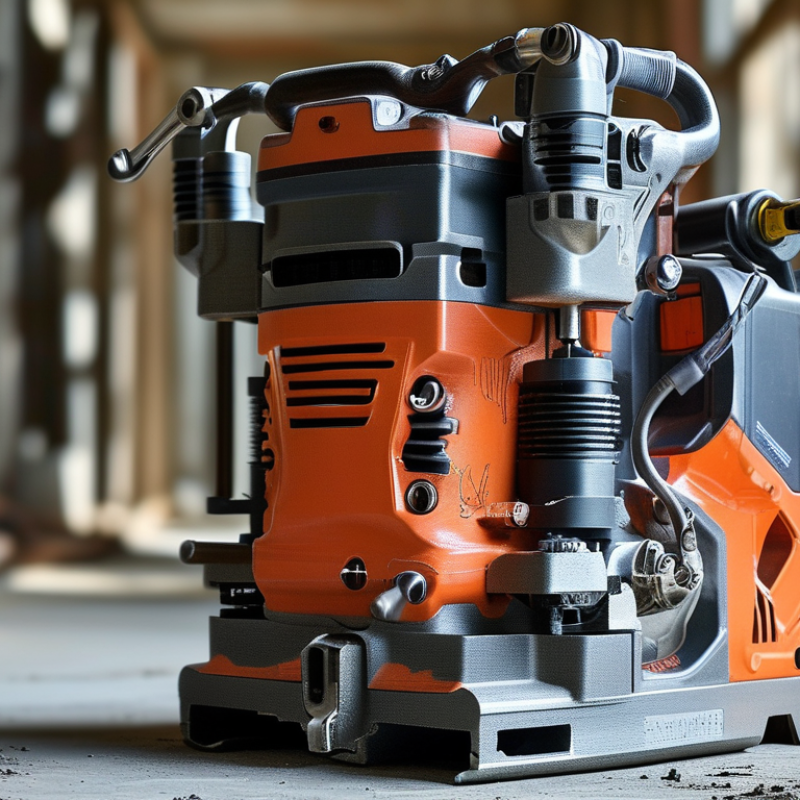
Air jack hammers are pneumatic breakers that convert compressed air into rapid piston impacts. They split concrete, remove asphalt, and loosen compacted soil. A demolition crew usually connects the tool to a compressor through a reinforced hose. Typical working pressure reaches about 90 psi, while air consumption often ranges from 20 to 40 cubic feet per minute.
Their core performance depends on impact frequency, impact energy, weight, and vibration control. A heavier hammer may deliver stronger blows, but it can tire operators quickly. ISO 28927-10 provides a testing framework for vibration from pavement breakers. EU-OSHA guidance identifies 2.5 m/s² A(8) as a hand-arm vibration action value and 5 m/s² as a limit value. These figures matter when buyers compare equipment for long shifts. Noise, cold exhaust, and hose movement also deserve attention. They are often overlooked.
Grand View Research estimated the global pneumatic tools market at roughly USD 3.3 billion in 2023, with construction remaining a major application area. For global buyers, manufacturer evaluation should include verified test data, spare-part availability, compressor compatibility, and service response. A tool that looks powerful may perform poorly with undersized air supply. Moisture can also damage internal parts. In field use, maintenance intervals are rarely perfect. That reality should shape procurement decisions. A practical trial on the actual concrete grade remains more reliable than a catalog number alone.
Top 10 Air Jack Hammer Manufacturers for Global Buyers - Air Jack Hammers: Definition, Uses, and Core Performance Features
Brand-neutral comparison of ten common air jack hammer configuration profiles. Figures are typical market specification ranges for pneumatic tools operating at approximately 90 psi (6.2 bar); actual values vary by tool design, bit type, hose length, and working material.
| Profile | Typical Tool Type | Primary Applications | Typical Tool Weight | Impact Rate | Air Consumption | Common Shank Size | Typical Noise Level | Core Performance Advantage |
| 01 | Light-Duty Chipping Hammer | Light concrete repair, brick removal, mortar cleaning, tile and plaster work | 6–12 kg | 2,000–3,500 blows/min | 18–28 cfm | 17.5–19 mm round | 95–103 dB(A) | Low handling fatigue and good control for overhead or detailed work |
| 02 | Medium Chipping Hammer | Concrete patching, masonry demolition, scaling and light trenching | 12–18 kg | 1,500–2,800 blows/min | 25–38 cfm | 19–22 mm round | 98–106 dB(A) | Balanced impact energy, portability and productivity |
| 03 | Paving Breaker | Asphalt, road repair, concrete slabs, foundations and general demolition | 20–30 kg | 1,000–2,000 blows/min | 35–55 cfm | 25–32 mm hex or round | 102–110 dB(A) | Higher impact energy for breaking dense pavement and reinforced concrete |
| 04 | Heavy-Duty Jack Hammer | Large concrete structures, bridge decks, industrial floors and heavy demolition | 30–40 kg | 800–1,500 blows/min | 45–70 cfm | 32–38 mm hex or round | 105–112 dB(A) | Maximum material removal rate in demanding demolition conditions |
| 05 | Vertical Jack Hammer | Floor breaking, foundation work, concrete removal and utility construction | 25–35 kg | 900–1,800 blows/min | 35–60 cfm | 25–32 mm hex | 102–110 dB(A) | Designed for downward force transfer and stable floor operation |
| 06 | Horizontal or Paving Chipper | Wall openings, façade repair, concrete edge trimming and horizontal surfaces | 14–24 kg | 1,200–2,400 blows/min | 28–45 cfm | 19–25 mm round or hex | 100–108 dB(A) | Improved maneuverability for wall, edge and angled applications |
| 07 | Low-Vibration Jack Hammer | Maintenance work, enclosed construction sites, utilities and prolonged operation | 18–30 kg | 900–1,700 blows/min | 30–52 cfm | 25–32 mm hex | 98–108 dB(A) | Reduced transmitted vibration through engineered handles or dampers |
| 08 | Underwater-Compatible Pneumatic Hammer | Marine construction, dock repair, underwater concrete and salvage work | 15–30 kg | 1,000–2,000 blows/min | 30–55 cfm | 19–32 mm round or hex | Typically 100–110 dB(A) in air | Air-powered operation avoids electrical power at the tool and supports wet environments |
| 09 | Rock and Quarry Jack Hammer | Secondary rock breaking, quarry work, mining support and hard-ground preparation | 25–40 kg | 700–1,500 blows/min | 45–75 cfm | 32–38 mm hex or round | 105–115 dB(A) | High durability and impact energy for abrasive, hard materials |
| 10 | Compact Utility Jack Hammer | Utility trenching, pipe installation, curb removal and confined-space repairs | 10–20 kg | 1,400–2,800 blows/min | 22–40 cfm | 19–25 mm hex or round | 98–107 dB(A) | Compact dimensions and moderate air demand for mobile job-site use |
Note: Pneumatic jack hammers normally require a correctly sized compressor, lubricator, whip hose, safety couplings and suitable personal protective equipment. Hearing protection is generally required because operating noise commonly exceeds 85 dB(A).
Selection Criteria for Ranking Global Air Jack Hammer Manufacturers
Selection Criteria for Ranking Global Air Jack Hammer Manufacturers
A credible ranking begins with measurable field performance, not advertising claims. Grand View Research valued the global power tools market at approximately USD 36 billion in 2023, showing the scale of this equipment category. Yet market size does not prove reliability. Buyers should compare impact energy, blows per minute, air consumption, and performance under continuous load. Test results should come from controlled trials, not only laboratory demonstrations.
Vibration deserves equal weight. The European Commission identifies hand-arm vibration as a major occupational exposure concern, while ISO 28927 provides methods for measuring vibration from hand-held power tools. A strong manufacturer publishes vibration readings, test conditions, and uncertainty limits. It should also provide noise data, maintenance intervals, spare-part availability, and documented pressure requirements. Small details matter. A leaking hose can erase rated performance.
Ranking should include verified service records from mines, demolition crews, and infrastructure contractors. The Freedonia Group’s World Construction Equipment report highlights replacement demand and aftermarket support as important purchasing factors. Warranty length alone is weak evidence. Response time is stronger. I would score product durability at 30%, safety data at 20%, operating efficiency at 20%, service coverage at 20%, and technical transparency at 10%. This weighting is imperfect, and field conditions vary widely. Wet tunnels and dusty quarries can challenge any neat ranking. Independent testing should therefore be repeated across climates, operators, and working pressures.
Top 10 Air Jack Hammer Manufacturers and Their Product Strengths
The top 10 air jack hammer manufacturers usually compete through durability, impact force, and service support. Their strongest models use hardened steel bodies, balanced valve systems, and replaceable wear parts. These features matter on concrete floors, road repairs, and quarry work. Experienced buyers often inspect vibration control before comparing advertised power. A powerful tool can still be tiring.
Several leading manufacturers offer different product strengths. Some focus on compact hammers for confined spaces and overhead tasks. Others build heavy-duty models for long demolition shifts. Reliable suppliers provide clear air-consumption data, compatible chisels, repair manuals, and accessible spare parts. Corrosion-resistant finishes help in damp workshops, although coatings can wear near the bit area. In my experience, published specifications are useful, but field testing reveals more. Noise, hose connection quality, and trigger response are easy to underestimate.
Tips: Match the hammer to your compressor’s continuous output, not its peak rating. Check operating pressure, blow frequency, tool weight, and maintenance intervals. Ask for test records or warranty terms before ordering. Keep a spare retainer, spring, and sealing kit nearby. Do not choose the cheapest model automatically. That shortcut often becomes expensive after repeated downtime. A small mistake in air-line sizing can also reduce impact strength noticeably.
Comparing Models, Standards, Pricing, and International Support
Top 10 Air Jack Hammer Manufacturers for Global Buyers
Model comparison should begin with application, not catalogue ranking. Light breakers suit brick removal and short repairs. Heavy models handle concrete, asphalt, and quarry work, but require higher air volume. Typical specifications range from 20 to 90 joules, with air consumption commonly between 25 and 90 cubic feet per minute. A smaller compressor may cause weak blows and overheating. That detail is often missed.
Grand View Research’s 2024 pneumatic tools analysis forecasts market growth of nearly 5% annually through 2030. This supports stronger demand, but does not make every supplier dependable. Buyers should request verified test sheets, cycle-life data, and spare-parts availability. ISO 11148-4 addresses safety requirements for handheld non-electric power tools, including breakers and riveters. Compliance documents should identify the exact model, not only the factory family. OSHA’s 29 CFR 1910.95 uses 90 dBA as the eight-hour permissible exposure limit, so noise data deserves serious attention.
International pricing is less simple than the product page suggests. A basic air hammer may cost about 150 to 400 US dollars, while heavy-duty units can exceed 1,000 dollars before freight, hoses, and duties. Compare landed cost, warranty response time, and local repair capacity. A supplier offering remote diagnosis, multilingual manuals, and regional stock reduces downtime. I would still test samples first. A polished quotation can hide poor vibration control, inconsistent machining, or slow support. One overlooked issue remains uncertain: published air-consumption figures may be measured under different pressures, making direct comparison imperfect.
Top 10 Air Jack Hammer Manufacturers for Global Buyers
Comparing model performance ranges, operating standards, pricing, and international support
This brand-neutral benchmark compares ten common air jack hammer supplier profiles using published market ranges. Impact rate and air consumption reflect typical pneumatic tool specifications tested around the widely used 6.3 bar operating pressure. Pricing represents indicative international purchase ranges in USD, while standards and support scores summarize commonly requested compliance and export-service capabilities. Higher support scores indicate broader documentation, spare-parts availability, warranty handling, and distributor coverage.
A Practical Supplier Verification Guide for Global Buyers
Top 10 Air Jack Hammer Manufacturers for Global Buyers
A Practical Supplier Verification Guide for Global Buyers
Choosing among the top 10 air jack hammer manufacturers requires more than comparing catalog prices. Ask for a verifiable company registration, factory address, production photographs, and recent inspection records. A polished PDF is not proof. Request a live video tour showing machining, assembly, testing, and finished-tool storage. The ISO Survey 2022 reported 1,265,216 ISO 9001 certificates worldwide, but certification alone cannot confirm product quality or production capacity.
Check each supplier’s technical evidence carefully. Test reports should identify impact frequency, air consumption, operating pressure, tool weight, vibration, and sound levels. NIOSH recommends controlling occupational noise near 85 dBA over an eight-hour workday, so unclear noise data deserves attention. Ask for serial-number traceability and a sample unit before placing a large order. Small details matter.
Review spare-parts availability, warranty terms, packaging strength, and response times. Request references from buyers in similar climates and industries. Shipping records can reveal whether delivery promises are realistic; the World Bank’s Logistics Performance Index 2023 assessed logistics performance across 139 economies. I would still treat rankings as context, not evidence. Some suppliers answer quickly but avoid technical questions. That is a warning sign. A factory audit may cost money, yet one missed inspection can cost much more.